




 Erica Wilson
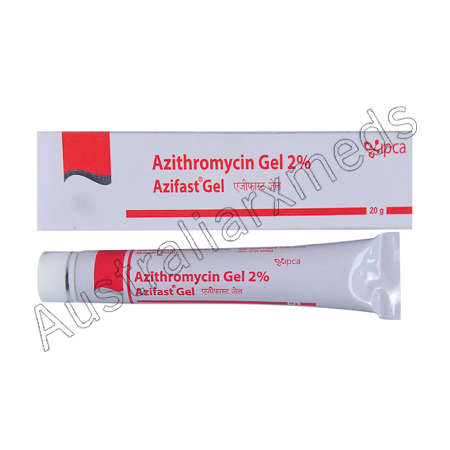
Clinical Summary: Azifast Gel is a prescription topical macrolide antibiotic manufactured by Ipca Laboratories Ltd., formulated with Azithromycin 2% w/w in a lightweight, fast-absorbing aqueous gel base. Clinically indicated for the treatment of mild-to-moderate inflammatory acne vulgaris, Azifast Gel for acne works directly inside congested hair follicles to stop the growth of acne-causing bacteria (Cutibacterium acnes) while calming localized redness and swelling. Supplied in a 20 g tube, this targeted azithromycin gel provides an effective, gentle alternative for acne-prone skin that experiences excessive dryness or peeling from harsh benzoyl peroxide or strong retinoids.
Product Specifications
| Clinical & Commercial Parameter | Product Formulation Details |
| Product Trade Name | Azifast Gel / Azifast 2% Gel |
| Active Pharmaceutical Ingredient (API) | Azithromycin IP (2% w/w / 20 mg per gram) |
| Pharmacological Class | Topical Macrolide Antibiotic / Anti-Acne Agent |
| Formulation Base | Lightweight, non-greasy, translucent topical gel |
| Packaging Size | 20 g collapsible tube |
| Primary Clinical Indication | Mild-to-Moderate Inflammatory Acne Vulgaris (Papules & Pustules) |
| Recommended Course Duration | Typically 8 to 12 weeks (under dermatological supervision) |
| Route of Administration | Cutaneous (For external dermatological use only) |
| Australian Regulatory Schedule | Schedule 4 (S4) – Prescription Only Medicine |
What is Azifast Gel (Azithromycin Gel)?
Azifast Gel is a specialized topical antibacterial formulation containing 2% azithromycin. While azithromycin is widely known as an oral macrolide antibiotic, formulating it into a localized azithromycin gel allows high concentrations of the medicine to penetrate directly into oil-rich pilosebaceous follicles without exposing the rest of the body to systemic antibiotic side effects.
Azifast Gel is designed specifically for cutaneous application on the face, chest, and back. Its water-soluble gel vehicle absorbs rapidly without leaving an oily film, making it suitable for combination and oily, acne-prone skin.
Azifast Gel Ingredients & Formulation Breakdown
Understanding Azifast gel ingredients helps patients with sensitive or allergy-prone skin evaluate compatibility:
- Active Ingredient – Azithromycin IP (2.0% w/w): A broad-spectrum macrolide antibiotic that targets Gram-positive anaerobic skin bacteria (Cutibacterium acnes) and suppresses localized follicular inflammation.
- Gel Base & Excipients (q.s.): Formulated in a purified aqueous-hydroalcoholic carbomer gel matrix with gentle humectants and pH stabilizers (balanced near skin-neutral pH ~6.8) to ensure stability and rapid evaporation without clogging pores.
- Formulation Purity: Free from heavy comedogenic oils, lanolin, and fragrances. (Always check the outer carton for the complete batch excipient list if you have known sensitivities to preservatives or carbomers).
What is Azifast Gel Used For? (Azifast Gel for Acne)
Dermatologists prescribe Azifast Gel for acne and related localized bacterial skin conditions:
- Inflammatory Acne Vulgaris (Papules & Pustules): Reduces red, tender, swollen pimples and pus-filled lesions on the face, shoulders, chest, and upper back by suppressing bacterial proliferation inside blocked pores.
- Second-Line Option for Intolerant Skin: Ideal for acne patients who develop severe erythema, burning, or allergic contact dermatitis from benzoyl peroxide or topical retinoids.
- Papulopustular Rosacea (Specialist Off-Label): Occasionally utilized in dermatology to calm inflammatory bumps and follicular redness associated with rosacea.
- Superficial Bacterial Folliculitis: Helps clear localized bacterial inflammation of hair follicles caused by susceptible Gram-positive organisms.
Clinical Scope Note: Azifast Gel treats bacterial inflammatory lesions. It is not effective against viral skin infections (such as cold sores), fungal acne (Malassezia folliculitis), or deep non-inflammatory closed comedones alone without a comedolytic agent.
Mechanism of Action: How Azifast Gel Clears Breakouts
Acne breakouts worsen when excess sebum and dead skin cells trap Cutibacterium acnes bacteria inside the hair follicle, triggering an immune cascade of redness and pus. Azifast Gel targets this process through two complementary actions:
- 50S Ribosomal Protein Synthesis Blockade: Azithromycin penetrates bacterial cell walls and binds reversibly to the 50S ribosomal subunit. This blocks RNA-dependent protein synthesis, halting bacterial growth and preventing infection from spreading to adjacent pores.
- Direct Anti-Inflammatory Action: Azithromycin concentrates inside human immune cells (neutrophils and macrophages) at the site of inflammation, reducing the release of inflammatory cytokines and free radicals. This calms redness and swelling around active breakouts.
Azifast Gel How to Use: Step-by-Step Application Guide
Following proper instructions for Azifast Gel how to use maximizes clearing while preventing antibiotic resistance:
- Cleanse & Dry Thoroughly: Wash the affected skin area with a gentle, soap-free facial cleanser and pat completely dry with a clean towel. Wait 5 minutes so the skin surface is free of excess moisture.
- Apply a Thin Film: Squeeze a small, fingertip-sized amount of Azifast Gel and spread a thin, even layer across the affected acne-prone zone. Do not apply thick globs.
- Frequency of Application: Apply once or twice daily (typically morning and/or evening) exactly as directed by your prescribing doctor.
- Wash Hands: Wash your hands immediately after applying the gel (unless treating your hands) to avoid accidental transfer to your eyes or mouth.
- Layering Skincare: Allow the gel to dry completely for 5 to 10 minutes before applying a non-comedogenic moisturizer or broad-spectrum SPF 50+ sunscreen.
Preventing Antibiotic Resistance: The Combination Rule
To prevent skin bacteria from developing resistance to macrolides, dermatologists recommend completing your full prescribed 8- to 12-week course even if spots clear early. Your doctor may also advise pairing Azifast Gel with a benzoyl peroxide wash (used at a different time of day) to eliminate resistant bacterial strains.
Azifast Gel for Acne Reviews: Clinical & Patient Insights
When evaluating Azifast Gel for acne reviews across clinical dermatology studies and real-world patient feedback, several consistent themes emerge:
- High Skin Comfort & Low Irritation: Unlike benzoyl peroxide (which bleaches fabrics and causes intense dryness) or tretinoin (which triggers heavy peeling), patients consistently rate Azifast Gel as gentle, cooling, and non-stinging on sensitive skin.
- Reduction in Red, Painful Pimples: Clinical trials evaluating 2% topical azithromycin demonstrate significant reductions in inflamed papules and pustules within 4 to 8 weeks, with peak clarity achieved at 12 weeks.
- Realistic Expectations: Reviewers note that Azifast Gel works best on active red pimples and pustules rather than stubborn blackheads or deep cystic nodules, which typically require combination therapy with a topical retinoid.
Azifast Gel Substitute & Alternative Options
Patients searching for an Azifast gel substitute generally fall into two categories: exact active-ingredient bioequivalents or alternative anti-acne classes prescribed by a doctor:
| Substitute / Alternative Brand | Active Ingredient | Therapeutic Relationship | Clinical Comparison |
| Zithrotop Gel / Topmycin Gel | Azithromycin 2% w/w | Exact Generic Substitute | Identical active macrolide molecule and 2% strength; differs only in manufacturer and gel excipients. |
| Clindac A / Dalacin T Gel | Clindamycin 1% w/w | Same-Class Lincosamide Alternative | Comparable antibacterial efficacy for inflammatory acne; widely used alternative if azithromycin is unavailable. |
| Erytop / Erythromycin 2% Gel | Erythromycin 2% w/w | First-Generation Macrolide | Older macrolide antibiotic with similar lesion reduction, though C. acnes resistance rates are higher than with azithromycin. |
| Adaferin Gel 0.1% | Adapalene 0.1% w/w | Non-Antibiotic Retinoid Alternative | Targets clogged pores, blackheads, and skin turnover rather than bacteria; frequently paired alongside topical antibiotics. |
Azifast Gel Side Effects & Safety Precautions
Because Azifast Gel acts locally on the skin with negligible systemic absorption, Azifast Gel side effects are generally mild, temporary, and confined to the application area:
Common, Mild Local Reactions
- Mild burning, stinging, or tingling sensation immediately after application.
- Temporary skin dryness, slight redness (erythema), or minor flaking.
- Localized itching (pruritus) at the treated site.
Important Safety Warnings & Contraindications
- External Cutaneous Use Only: Never ingest. Keep strictly away from the eyes, eyelids, inner nostrils, lips, and mucous membranes. Rinse thoroughly with cool water if accidental contact occurs.
- Do Not Apply to Broken Skin: Avoid applying over open cuts, active eczema flares, or severe sunburn.
- Macrolide Hypersensitivity: Contraindicated in anyone with a known allergy to azithromycin, erythromycin, clarithromycin, or any gel excipients.
- Pregnancy & Breastfeeding: Topical systemic absorption is minimal, but adequate controlled trials in pregnancy are limited. Consult your doctor before use if pregnant or nursing, and never apply near the chest/breast area while breastfeeding.
- Avoid Harsh Layering: Do not layer abrasive physical scrubs, astringent alcohol toners, or multiple irritating acne acids at the exact same time unless instructed by your dermatologist.
Azifast Gel Australian Sourcing Guide
- Azifast Gel Price Overview: In domestic retail pharmacies, topical antibiotic acne gels often carry high dispensing markups. Sourced via licensed international pharmacy channels.
- Australian Regulatory Status: In Australia, topical and systemic macrolide antibiotics are classified as Schedule 4 (Prescription Only) medicines under the TGA Poisons Standard to ensure responsible antibiotic use.
Where Can I Buy Azifast Gel?
You can order genuine Azifast Gel 20 g (Azithromycin 2% w/w) securely through AustraliaRxMeds:
- Direct Online Ordering: Purchase factory-sealed 20 g tubes via AustraliaRxMeds with tracked international shipping.
- TGA Personal Importation Compliance (Australia): Australian residents can legally order and import genuine Azifast Gel under the Therapeutic Goods Administration (TGA) Personal Importation Scheme provided that:
- You hold a valid prescription from an Australian-registered medical practitioner or dermatologist.
- You import no more than a 3-month supply per single shipment at your prescribed dose.
- Your total imported volume across a 12-month period does not exceed a 15-month supply.
- The medication is strictly for your personal medical treatment.
- Quality Assurance: AustraliaRxMeds supplies unadulterated, batch-verified pharmaceuticals manufactured under certified Good Manufacturing Practice (GMP) standards.
Medical References
- Therapeutic Goods Administration (TGA). Australian Poisons Standard: Schedule 4 – Macrolide Antibiotics (Azithromycin). Australian Government Department of Health and Aged Care.
- Iraji, F., & Sadeghinia, A. (2004). A topical azithromycin preparation for the treatment of acne vulgaris and rosacea. Journal of Dermatological Treatment, 15(5), 295–302.
- Zaenglein, A. L., et al. Guidelines of care for the management of acne vulgaris: Topical antibiotics and antimicrobial stewardship. Journal of the American Academy of Dermatology (JAAD).
- Pazoki-Toroudi, H., et al. (2010). The efficacy and safety of topical azithromycin 2% gel in comparison with clindamycin 1% gel in mild to moderate acne vulgaris. Journal of Dermatological Treatment.
FAQs
What is Azifast Gel used for?
Azifast Gel is a topical macrolide antibiotic containing 2% azithromycin. It is primarily prescribed for mild-to-moderate inflammatory acne vulgaris, helping clear red, swollen pimples and pustules by stopping the growth of acne-causing bacteria (Cutibacterium acnes) inside clogged pores.
How do you apply Azifast Gel for acne?
Wash and thoroughly dry the affected skin, then apply a thin layer of Azifast Gel once or twice daily as directed by your doctor. Wash your hands afterward, keep the gel away from your eyes and mouth, and complete the full prescribed 8- to 12-week course to prevent bacterial resistance.
How long does Azifast Gel take to work on pimples?
Most patients notice reduced redness and fewer new inflammatory pimples within 3 to 4 weeks of consistent daily use, with optimal clearing typically seen over 8 to 12 weeks.
What are the common Azifast Gel side effects?
Common Azifast Gel side effects are mild and localized to the application site, including temporary burning or stinging, mild redness, dryness, or slight itching. These symptoms usually fade as your skin adjusts.
What is a good Azifast gel substitute?
Exact generic substitutes containing Azithromycin 2% w/w include Zithrotop Gel and Topmycin Gel. If your doctor recommends a different anti-acne class, common clinical alternatives include Clindamycin 1% gel, Erythromycin 2% gel, or topical retinoids like Adaferin Gel 0.1% (Adapalene).
Do I need a prescription to buy Azifast Gel in Australia?
Yes. In Australia, azithromycin is a Schedule 4 prescription-only medicine. Under the TGA Personal Importation Scheme, you must hold a valid prescription from an Australian-registered doctor to order Azifast Gel online.