

A Guide to Libido for Men and Women
By Erica Wilson, Aug-12-2023


 Dr. Arjun Srivastav Medical Reviewer (Pharm D)
 Most people think of their sex drive as a number that should sit at a fixed level. The reality is more interesting. Your sex drive is dynamic. It moves with your circumstances, your health, your relationships and the season of life you are in.
Rather than chasing an imaginary ideal, it helps to understand what this drive actually is, why it shifts and when a change is worth paying attention to.
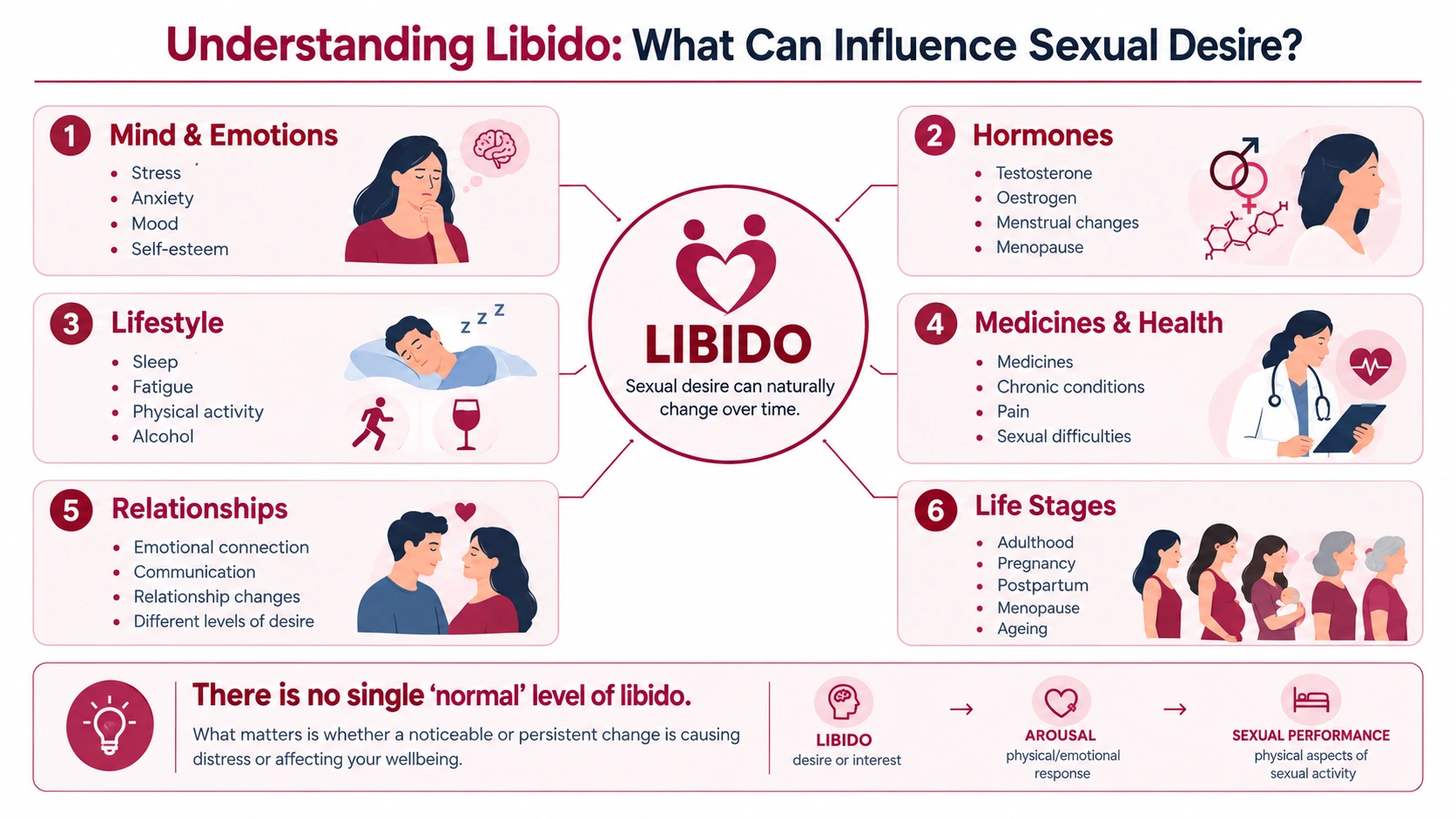
There is no right or wrong level of desire. Better Health Channel specifically notes that there is no single correct level and that desire can fluctuate according to circumstances. A lower interest in sex is not automatically a medical problem. The more useful question is whether a change is new, persistent, distressing or affecting your relationships and overall wellbeing.
Libido refers to a person’s sexual desire or interest in sexual activity. It naturally varies from person to person and can change over time due to factors such as hormones, stress, sleep, relationships, medicines, health conditions and life stages. A change in libido is not automatically a medical problem, but persistent or distressing changes are worth discussing with a healthcare professional.
What Is Libido?
Libido is your desire or interest in sexual activity, often called your sex drive. It describes the wanting, the pull toward intimacy, rather than what your body does once you are there.
This is where many people get tangled. Your sex drive is not the same as sexual arousal, and it is not the same as sexual performance. You can feel genuine desire for sex yet experience a physical difficulty, such as trouble with erections or lubrication. The wanting is present even when the body does not respond the way you expect. The reverse is also true. Your body can show signs of physical arousal without you actually wanting sexual activity in that moment.
Is There a Normal Level of Libido?
There is no universal level of desire. People can have very different sex drives and both can be completely healthy. Desire also fluctuates over days, months and years.
Some people experience desire that arrives on its own, almost spontaneously. Others find that desire builds after emotional connection, pleasant stimulation or simply the right situation. Neither pattern is more correct than the other. Partners can naturally have different levels of desire. Sexual Health Victoria specifically describes desire discrepancy, where partners have different levels of sexual desire, as a common and ordinary experience.
This is why the phrase low sex drive should not automatically mean something is wrong. Change plus distress plus impact is a far better guide than comparing yourself to an imaginary normal standard.
It is also important to distinguish low libido from problems with sexual function. Someone may still have sexual desire while experiencing difficulty getting or maintaining an erection. ED pills are intended for erectile difficulties rather than low libido itself.
💡 Tip
What Can Affect Libido?
Many factors can shape your sex drive. Rather than thinking of a single cause, it helps to group the common contributors into five areas. None of them automatically means your desire will drop, but together they paint a fuller picture.
Physical and medical factors
Chronic health conditions can play a part. These may include diabetes, cardiovascular health concerns, thyroid problems, anaemia, obesity and ongoing pain. Other sexual difficulties, such as pain during intercourse, can also affect interest. Healthdirect and Better Health Channel both identify medical conditions as potential contributors to reduced desire.
Hormonal changes
Testosterone and oestrogen both have a role. Hormonal shifts can occur during the menstrual cycle, pregnancy, breastfeeding, perimenopause and menopause. Age related hormonal changes can also be relevant. When levels move outside a healthy range in either direction, the balance matters. For example, high testosterone in males can bring its own set of concerns, just as a shortfall can.
Psychological factors
Stress, anxiety and depression can dampen desire. So can low self esteem, body image concerns, performance anxiety and emotional exhaustion. Your mental state and your sex drive are closely connected.
Relationship factors
Emotional disconnection, communication difficulties and conflict can all affect intimacy. Other relevant factors include a lack of privacy, different levels of desire between partners and changes in attraction or closeness.
Lifestyle and daily life
Poor sleep and fatigue can leave little energy for sex. Other lifestyle contributors may include:
- Alcohol
- Smoking
- Recreational drugs
- Too little or excessive physical activity
- Work and family pressures
Libido in Men
Male sex drive is often reduced to a single hormone, but the picture is broader than that. A complete view considers several overlapping areas including hormonal balance, mental health, physical health, medicines, sexual function and relationship quality. For a deeper look, understanding the ins and outs of low sex drive in men shows how these factors interact rather than acting in isolation.
Testosterone and male desire
Testosterone does have a role in sexual desire. However, a lower sex drive does not automatically mean low testosterone. Testosterone deficiency can produce reduced sexual desire, but its symptoms can overlap with other health conditions. Proper assessment matters more than self diagnosis.
Testosterone can influence sexual desire, but libido is not determined by testosterone alone. Stress, health conditions, medicines, sleep, relationships and sexual difficulties can also affect desire. Testosterone and men’s health
Other factors that can affect male desire
Several factors can influence desire in men, including:
- Stress
- Depression and anxiety
- Diabetes
- Obesity
- Chronic illness
- Certain medicines
- Erectile difficulties
- Premature or delayed ejaculation
- Relationship difficulties
- Alcohol and smoking
Healthdirect specifically lists these as potential contributors to male changes in desire. Wanting sex and being able to achieve or maintain an erection are not exactly the same thing. A man can have intact desire and still experience erectile difficulties, and treating one does not always resolve the other.
Libido in Women
Female sex drive is often oversimplified. A more complete view considers hormones, comfort, emotions and relationships together.
Hormonal and life stage changes
Desire can shift across several life stages, including:
- The menstrual cycle
- Pregnancy
- The postpartum period
- Breastfeeding
- Perimenopause
- Menopause
Each life stage brings its own hormonal shifts and practical realities.
Physical comfort matters
Vaginal dryness, pain during sex, pelvic floor issues and difficulty reaching orgasm may influence desire directly or indirectly. When sex is uncomfortable, interest often follows. Healthdirect identifies pregnancy, breastfeeding, contraception, menopause and painful sex among factors associated with changes in female desire.
Emotional and relationship factors
Stress, body image, relationship connection, communication, fatigue and mental health can all shape desire. The connection between how a woman feels emotionally and how she experiences desire is strong. It is more accurate to say that sex drive can change with age, rather than to claim that women naturally lose desire as they age. Ageing alone does not determine a person’s interest in sex. Ageing alone does not determine a person’s interest in sex, and there is a difference between the sexuality of men and women worth understanding when reading general guidance.
How Hormonal Changes Can Influence Libido
Hormones deserve their own consideration because their influence can be both direct and indirect. They can affect desire by changing how much someone wants sex, by affecting physical comfort during sex, by influencing mood and energy and by interacting with sleep and stress.
Testosterone and desire
Testosterone has a relationship with sexual desire, but not every case of reduced interest is hormonal. It is one piece of a much larger picture.
Oestrogen and sexual wellbeing
Oestrogen can influence desire, vaginal comfort, lubrication and sexual response. Changes in oestrogen may affect how sex feels as well as how much someone wants it.
Menopause and desire
Menopause can affect desire through both hormonal and non hormonal pathways. Contributing factors may include:
- Sleep problems
- Hot flushes
- Mood changes
- Vaginal dryness
- Pain
The experience is individual and often involves several factors at once. For those wondering whether desire can recover, the return of sexual drive after menopause is a question worth exploring, since menopause does not automatically end sexual interest.
Can Medicines Affect Libido?
Some medicines can affect sexual desire or sexual function. Rather than memorising a long drug list, it helps to know the categories that are sometimes involved:
- Some antidepressants
- Some medicines for anxiety
- Some blood pressure medicines
- Some pain medicines
- Certain hormonal contraceptives
Both Healthdirect and Better Health Channel identify medicines as possible contributors. Never stop a prescribed medicine simply because you think it is affecting your sex drive. Speak with your doctor or pharmacist about possible alternatives or adjustments. Healthdirect specifically advises against stopping prescribed medicines without medical advice.
🔔 Reminder
Why Has My Libido Suddenly Changed?
A sudden shift in desire is one of the most common things people search for, and it is worth answering directly. A noticeable change may be associated with major stress, poor sleep, illness, a new medication, hormonal changes, relationship difficulties, emotional distress, pain during sex, erectile or other sexual difficulties or significant lifestyle changes. When hormonal changes are involved, the effects of testosterone on men health can extend beyond desire and influence mood, energy and physical wellbeing.
A useful approach is to look for the pattern. Ask yourself:
- When did the change begin?
- What else shifted around the same time?
- Are there other symptoms?
- Is the change affecting your daily life or relationships?
This kind of honest reflection often points toward what is really going on. It also gives a healthcare professional far more useful information than a vague sense that something feels off.
⚠️ Warning
Libido and Age
Desire may change throughout adulthood, but age does not automatically eliminate sexual interest. Health, hormones, medications, relationships and lifestyle may all influence how desire shifts over time. Menopause can affect sex drive through multiple pathways, and older adults can continue to experience sexual desire and intimacy. The story is not a simple decline.
How to Support Healthy Libido
Supporting your sex drive is less about chasing a higher number and more about understanding what has changed and supporting sexual wellbeing overall.
Start with the basics
Simple steps can make a meaningful difference:
- Improve sleep
- Manage ongoing stress
- Stay physically active
- Limit excessive alcohol
- Avoid smoking and recreational drugs
- Address health conditions
- Make time for intimacy
- Communicate with your partner
- Address painful sex or other sexual difficulties
- Review potentially contributing medicines with a healthcare professional
Healthdirect recommends healthy lifestyle measures, communication and addressing contributing factors. The goal is not necessarily to make your sex drive higher. It is to understand what has changed and support sexual wellbeing in a way that fits your life. If hormonal imbalance is part of the picture, knowing how high testosterone can be managed is just as important as addressing a shortfall, since balance matters more than chasing a single number.
Libido vs Sexual Arousal vs Sexual Performance
This distinction matters enough to return to. Your sex drive asks whether you want sexual activity. Arousal asks whether you are experiencing a physical or emotional response. Performance asks whether you are experiencing difficulties with erection, lubrication, orgasm or ejaculation.
| Term | What it asks | What it describes | Example |
|---|---|---|---|
| Sex drive (libido) | Do I want sexual activity? | Desire or interest in sexual activity | You feel interested in having sex or being intimate |
| Sexual arousal | Is my body or mind responding to sexual stimulation? | Physical or emotional response to sexual stimulation | You may experience an erection, lubrication or heightened physical awareness |
| Sexual performance | Am I experiencing difficulty with the physical side of sex? | Physical aspects such as erection, lubrication, orgasm or ejaculation | You want to have sex and feel aroused but have difficulty maintaining an erection |
Confusing these can lead people to look for the wrong solution. Someone with strong desire but erectile difficulties does not need their drive fixed. Someone with a responsive body but little active interest does not necessarily have a performance problem. Knowing which one applies to you points you toward the right kind of support.
When Should You Talk to a Doctor About Low Libido?
Professional assessment is worth considering when your desire remains low or keeps changing, when the change causes distress or affects a relationship, when there is pain during sex, when there are erection or ejaculation difficulties, when there are symptoms of anxiety or depression, when the change follows a new medicine, when hormonal changes are suspected or when other unexplained symptoms appear.
Healthdirect recommends medical advice when persistent low sex drive causes distress or affects relationships. Its female guidance also highlights persistent symptoms, pain, orgasm difficulties, mental health concerns and medication effects.
How Is Low Libido Assessed?
Assessment may involve several steps:
- A discussion of your symptoms
- Your medical history
- Your current medicines
- Your lifestyle
- Your relationship or emotional factors
- Sexual symptoms
- A physical examination where appropriate
- Blood tests when clinically indicated
Better Health Channel notes that assessment can include medical history, physical examination and blood tests depending on the situation. You do not need to order a specific hormone panel yourself. A healthcare professional can decide what testing, if any, is relevant for your circumstances. A testosterone level test is one example of testing that may be considered when clinically indicated.
🚨 Important
A Final Word on Sex Drive
Your sex drive is personal, fluid and shaped by many overlapping factors. There is no single correct level, and a change only becomes a concern when it is new, persistent, distressing or affecting your relationships and wellbeing. Understanding the difference between desire, arousal and performance helps you ask the right questions. Paying attention to the pattern behind a change matters more than comparing yourself to an imagined standard. If something feels off, a healthcare professional can help you make sense of what is happening and find the right support.
FAQ
What does libido mean?
Libido is your desire or interest in sexual activity, commonly called your sex drive.
Is there a normal level of desire?
No. Desire varies widely between people and fluctuates over time, so there is no single normal level.
What causes low sex drive?
Many factors can contribute, including stress, hormonal changes, relationship difficulties, health conditions, certain medicines and lifestyle factors.
Can stress lower desire?
Yes. Stress hormones can affect sexual desire and response, so ongoing stress may influence your interest in sex.
Does testosterone affect desire?
Testosterone has a role in desire, but reduced interest does not always mean low testosterone. Proper assessment is important.
Can menopause affect sex drive?
Yes. Menopause can influence desire through hormonal shifts, sleep problems, mood changes and physical comfort.
Is low libido the same as erectile dysfunction?
No. Your sex drive is about wanting sex, while erectile dysfunction is about the physical ability to achieve or maintain an erection.

Years of Experience: 10+ years Education: B.Sc. in Biomedical Science (Monash University, Melbourne, Australia) PG Diploma in Health & Medical Communication (University of Sydney, Australia) Experience: Erica Wilson is an…

